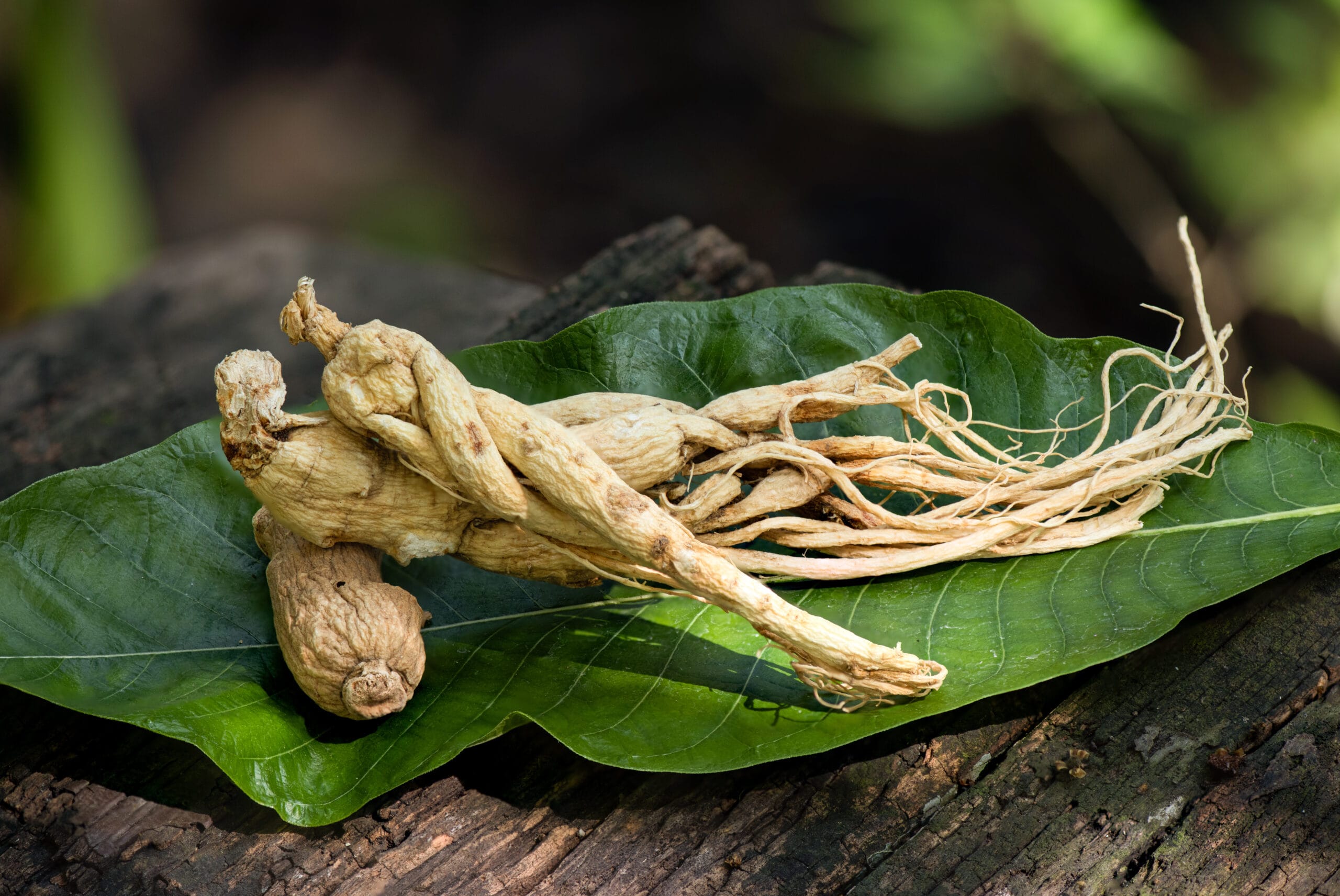
What is ginseng?
Ginseng, also known as Asian ginseng, is a traditional medicinal plant that has been used for thousands of years in Asia for its numerous health benefits. The plant belongs to the Araliaceae family and is native to the forests of north-east Asia, mainly China, Korea and eastern Siberia. Ginseng is also cultivated in North America, mainly in the United States and Canada.
The ginseng root is the most commonly used part of the plant in traditional medicine. It is slightly elongated and can be up to 8 centimetres long. The colour of the root varies from creamy white to pale yellow, and it has a slightly sweet taste. It is this root that is used to make ginseng-based food supplements.
What are the benefits of ginseng?
For thousands of years, ginseng has been used for its medicinal properties in traditional Chinese and Korean medicine. The different parts of the plant, including the root, leaves and stems, have been used to treat a variety of health problems, including fatigue, stress, respiratory infections and impotence.
Today, numerous scientific studies have been carried out to determine the real benefits of ginseng. Here are some of the most frequently cited benefits:
- Improved energy and vigour Ginseng: Ginseng is often used to boost energy and improve physical and mental vigour. Studies show that ginseng can reduce fatigue and increase energy levels when taken regularly.
- Reduced stress and anxiety Ginseng is also known for its adaptogenic properties, which means it can help the body adapt and cope with stress. Studies have shown that ginseng can have a beneficial effect on stress and anxiety levels, also improving quality of life and psychological health.
- Boosting the immune system Ginseng is rich in antioxidant and anti-inflammatory components that can help boost the immune system. Studies have shown that ginseng can help prevent infections and improve immune response when taken regularly as a dietary supplement.
- Improved cognitive function Some studies have suggested that ginseng can improve cognitive functions such as memory, concentration and learning. This may be due to its adaptogenic compounds, which can improve blood circulation and brain function.
- Prevention of chronic diseases Ginseng may also have beneficial properties for cardiovascular health by reducing blood pressure and improving blood circulation. Preliminary studies also show that it may have positive effects on chronic diseases such as diabetes and cancer, but further research is needed to confirm these effects.
How do I use ginseng as a dietary supplement?
Ginseng can be taken in a variety of forms, including capsules, tablets, liquid extracts and teas. It is advisable to follow the instructions on the packaging and consult a health professional before starting to take it as a dietary supplement.
The recommended dose varies according to age, state of health and the form of ginseng used. In general, it is advisable to start with a low dose and increase gradually if necessary. It is also advisable to take breaks when taking ginseng to avoid over-consumption.
It is important to note that ginseng can interact with certain drugs, particularly anticoagulants and diabetes medication. It is therefore important to consult a health professional before combining it with any other medical treatment.
Conclusion
Ginseng is an ancient medicinal plant that continues to be studied for its many health benefits. It can be used as a dietary supplement to boost energy, reduce stress and anxiety, boost the immune system and improve cognitive function. However, it is important to consult a health professional before starting to take it, and to follow the recommended doses to avoid any side effects.
Sources :
- Effects of ginseng on quality of life and psychological health: a systematic review of the literature
- Immunomodulating and anti-tumour properties of ginseng
- Effects of ginseng on cognition: a systematic review of the literature
- Ginseng as a potential treatment for chronic diseases: an overview of its pharmaceutical effects and interactions with drugs